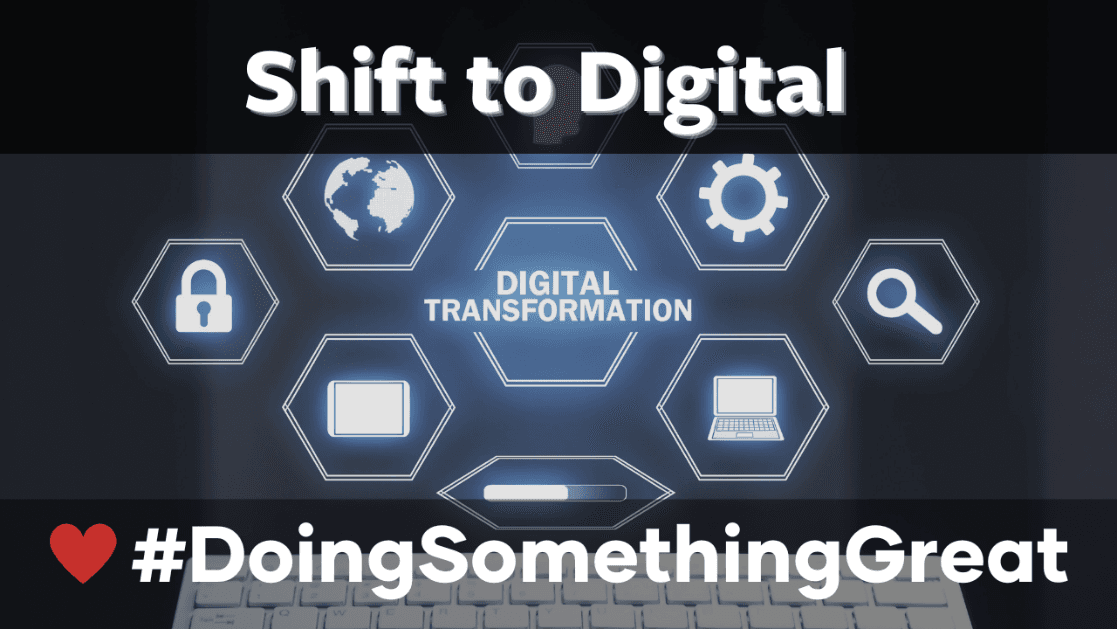
Shift to Digital
Every company wants to become digital, interactive, and data driven. We've seen an exponential growth in digital transformation within many organisations, and this trend is expected to keep growing in 2023 and beyond.
Digital transformation is used far more widely than digital shift. I would argue that the second term would be more useful in a business context, since "transformation" implies an end state, but continual transformation is needed in today's digital economy.
In short, shift also implies a change. The point has also been made that companies must not only transform their operations, they must also shift their mindsets, attitudes, and beliefs.
What is Digital Transformation?
Digital transformation can be defined as a significant change in the way your business is managed, including strategy and operations. It is a process that enables organisations to improve customer experience, increase customer satisfaction, and stay competitive.
In this digitally enabled economy, speed, agility, and automation are key success factors. It's crazy to think that 88% of the Fortune 500 firms that existed in 1955 are gone. These companies have either gone bankrupt, merged, or still exist but have fallen from the top Fortune 500 companies. As the life expectancies of companies continue to shrink, organisations must be more vigilant than ever in remaining innovative and future-proofing their businesses.
Why Is Digital Transformation Important for Your Brand?
Digital transformation impacts every aspect of your business - from customer interaction and experience, to marketing, sales, and product development. Executives say that the top advantages of DT are improved operational efficiencies (40%), faster time to market (36%), and increased ability to satisfy customer expectations (35%).
Solutions such as Netcore marketing cloud help brands get the full experience of Digital Transformation for their customers, offering Customer Engagement & Experience, Personalization, Customer Data Platform, Product Experience, Email API, Journey Orchestration, and two decades of rich martech experience.
How to Accelerate Your Digital Transformation Journey?
The transformation to a digital business must be managed strategically. You must have a plan in place to guide your organisation through the process - and an end date for completion. Based on Forbes's projections, in 2023, we see the continuation of innovations and developments in transformative technologies such as artificial intelligence (AI), the internet of things (IoT), virtual and augmented reality (VR/AR), cloud computing, blockchain, and super-fast network protocols like 5G.
The Digital Shift: Transitioning Out of Traditional Marketing
An adaptive marketing strategy is one that is constantly changing based on relevant, accurate data to reach qualified individuals in the most effective ways. These types of strategies do not rely solely on one specific type of marketing. They are digitally based but use other forms of traditional advertising to enhance and reinforce the messaging seen online.
In the last couple years, organisations have begun spending more money on digital advertising than ever before. The reason is simple: return on investment (ROI). Low barriers to entry, combined with the ability to customize messaging and target highly specific audiences, digital marketing has been proven to generate higher returns than other traditional forms of media.
In digital advertisements, users are encouraged to take action and interact directly with the organisation so that their needs can be addressed almost instantly. Organisations can use chat features to discuss a particular event or campaign with a potential supporter in real time.
In digital marketing, engagement can be tracked, along with hundreds of other significant data points. Google Analytics provides data regarding website visits and ad exposure, allowing users to make changes in real-time to make their campaigns as impactful as possible. This immediate feedback is mostly unattainable with traditional forms of advertising.
By using historical data from Google Analytics, marketers can remarket to individuals they know have interacted with their website content in a specific way. This historical data, combined with Google's results-driven artificial intelligence, provides an opportunity to interact with potential constituents that traditional marketing simply does not have the capability to provide.
When digital marketing efforts are combined with traditional marketing it is very powerful. AI and blockchain are just a few of the technologies that are revolutionising the way we do business and are now available via the cloud in 'as-a-service' models.
#DoingSomethingGreat means shifting to digital tools to enable innovation and better insight which yields better business management and results.